Once you report a wind or storm damage claim, Louisiana law gives your insurer 14 days to begin adjusting the loss and 30 days to pay after receiving satisfactory proof of loss. For a catastrophic loss that first window extends to 30 days, and can be extended to 60. Those deadlines are set by Louisiana Revised Statute 22:1892, and knowing them changes how a claim conversation goes.
Most Louisiana homeowners never learn these rules until they are already in a dispute. This guide covers what your insurer is required to do, what counts as covered storm damage, how to file, and what to do when a claim comes back lower than the damage.
A note on what this is: we are roofing contractors, not attorneys or public adjusters. This explains the process and the published rules so you can make informed decisions. For advice on your specific policy or a disputed claim, talk to the Louisiana Department of Insurance or an attorney.
What Louisiana Law Requires Your Insurer to Do
R.S. 22:1892 imposes specific, dated obligations on insurers handling first-party property claims. The published statute is available in full through Justia’s copy of Louisiana R.S. 22:1892.
| Obligation | Deadline |
|---|---|
| Begin adjusting the loss after you report it | 14 days |
| Begin adjusting after a catastrophic loss | 30 days, extendable to 60 |
| Pay after receiving satisfactory proof of loss | 30 days |
| Make a written settlement offer | Within the applicable window after proof of loss |
The statute carries penalties. Where an insurer’s failure to pay is found arbitrary, capricious or without probable cause, the exposure is 50% damages on the amount owed, or $1,000, whichever is greater, plus attorney fees and costs. Failure to initiate loss adjustment within the required period carries a penalty of the greater of $5,000 or the amount under the statute’s damages provision.
You do not need to threaten anyone with this. But referencing the date you reported the loss, and asking when adjustment will begin, signals that you are tracking the timeline — and claims that are tracked tend to move.
Storm Damage Claims and Louisiana Law: What Is Considered Covered
A standard Louisiana homeowner policy covers sudden, accidental damage from a named peril. For roofs, that generally means:
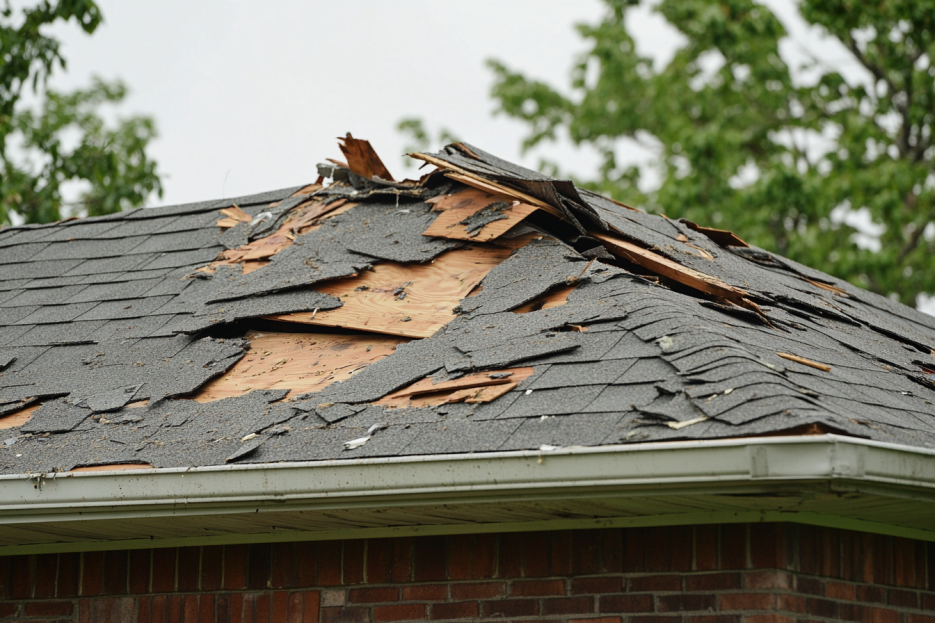
- Wind damage — shingles torn off, lifted or creased, ridge caps displaced, flashing and drip edge bent or removed
- Hail damage — impact bruising, granule loss, cracked or fractured shingles
- Falling objects — tree limbs and wind-driven debris
- Consequent water intrusion — interior damage that follows from a covered opening in the roof
What is generally not covered is deterioration: shingles at the end of their service life, long-term leaks the homeowner knew about, poor maintenance, and manufacturing defects. Flooding is separately excluded from standard policies and requires flood insurance — an important distinction in South Louisiana, where a single event can produce both wind damage and flooding under two different policies.
The frequent gray area is a roof that was already aging when the storm hit. Carriers will argue the damage is wear; the honest answer is usually that the storm accelerated a roof that had life left in it. That argument is won with documentation, which is why the photographs matter more than the phone call.
How to File a Wind Damage Roof Claim in Louisiana
- Document before you touch anything. Photograph wide shots of each elevation, then close shots of specific damage, plus interior staining and any debris. Keep the timestamps intact.
- Report the loss promptly. Call your carrier with the date of loss, policy number and a description. Get the claim number and the adjuster’s name and direct contact.
- Note the date you reported it. That date starts the 14-day clock.
- Take reasonable steps to prevent further damage. Tarping, boarding, moving contents. Keep every receipt — reasonable mitigation costs are usually reimbursable, and failing to mitigate can cost you the additional damage.
- Get an independent roof assessment. Have a licensed roofer inspect and document before the adjuster visits, and be present at the adjuster’s inspection if you can.
- Submit proof of loss. This is the formal document that starts the 30-day payment clock. Ask your carrier exactly what they require in it.
- Read the settlement in detail. Compare the line items against your roofer’s assessment rather than comparing totals.
Our step-by-step guide to what to do after storm roof damage covers the first 48 hours in more detail, and the roof insurance claims process explains what adjusters look for.
Hurricane and Named Storm Deductibles
This is where Louisiana homeowners get the biggest surprise. Hurricane and named-storm deductibles here are typically expressed as a percentage of the dwelling coverage, not a flat dollar figure. On a home insured for $300,000, a 2% hurricane deductible is $6,000 — considerably more than the $1,000 or $2,500 standard deductible on the same policy.
Two consequences follow. A claim worth less than that deductible is not worth filing. And on a claim well above it, the deductible is a real out-of-pocket number you need to plan for before work starts. Check your declarations page for the named-storm deductible specifically, because it is a separate line from your all-other-perils deductible.
Why Louisiana Storm Claims Get Underpaid
Most disputed claims are not outright denials. They are settlements that fall short, and they usually fall short for the same handful of reasons.
Damage the adjuster did not see. An adjuster covering dozens of properties after a widespread event spends limited time on each roof. Lifted shingles that have resealed, compromised fastening and damaged underlayment are easy to miss from a ladder.
Repair scoped where replacement is warranted. A settlement covering a partial slope on a roof where the shingle line is discontinued leaves the homeowner with a patchwork roof and no matching material.
Depreciation not recovered. Many policies pay actual cash value first and release the remaining recoverable depreciation only after the work is completed and invoiced. Homeowners who never submit the completion paperwork simply never receive the balance — it is not withheld, it is unclaimed.
Code upgrades omitted. Bringing a roof up to current code — the fastening and edge-metal requirements under the 2021 IRC as adopted by the LSUCCC, and the documentation required by Act 239 — is real cost. Ordinance and law coverage exists for this, but only if it is invoked.
Late reporting. Damage reported months later gives a carrier a reasonable argument that the roof aged rather than failed.
What to Do If Your Claim Is Denied or Underpaid
- Get the reason in writing. A carrier should state specifically why, with reference to policy language.
- Read the cited policy section yourself. Denials sometimes rest on exclusions that do not apply to your facts.
- Get an independent assessment documenting the damage and the cost to repair it properly.
- Request reinspection with your roofer present. A great many disputes resolve here, simply because someone points at damage the first inspection missed.
- Escalate within the carrier — ask for a supervisor or claims manager.
- File a complaint with the state. The Louisiana Department of Insurance takes homeowner complaints and can intervene where a carrier is not meeting its statutory obligations.
- Consider professional help. A public adjuster or attorney may be warranted on a large disputed claim. Both take a share, so weigh it against the gap.
Keep a written log throughout — every call, who you spoke to, what was said and when. In a dispute, the homeowner with dated records is in a materially stronger position than the one relying on memory.
Wind and Storm Damage Roof Repair in Louisiana
Once the claim is settled, the work itself matters as much as the money. Louisiana storm damage roofing has to meet design wind speeds of 130 to 140 mph around Baton Rouge under the 2021 IRC as adopted by the LSUCCC, and a repair that reuses old flashing or skips the permit fails the next storm the same way.
Tropical storm roof damage in Louisiana is frequently more extensive than it first appears, because sustained wind works fasteners loose across the whole field rather than tearing one visible patch. Any competent scope should account for that rather than pricing only what is missing.
Ryson Roofing handles wind damage roof repair and storm damage roof repair across Baton Rouge and the surrounding parishes, pulls the permits, and documents the work to the standard Act 239 requires. You can see the full range of what we do at Ryson Roofing.
Frequently Asked Questions
How long does an insurer have to respond to a claim in Louisiana?
Under R.S. 22:1892 an insurer must begin adjusting the loss within 14 days of your notification, or 30 days for a catastrophic loss, extendable to 60. Payment is due within 30 days of satisfactory proof of loss.
What penalties apply if my insurer misses those deadlines?
Where the failure is found arbitrary, capricious or without probable cause, the statute provides for 50% damages on the amount owed or $1,000, whichever is greater, plus attorney fees. Failure to initiate adjustment carries a penalty of the greater of $5,000 or the statutory damages amount.
What storm damage is considered covered under Louisiana law?
Sudden accidental damage from a named peril — wind, hail, falling objects — plus water that enters through the resulting opening. Deterioration, long-term leaks, poor maintenance and flooding are generally excluded, with flooding requiring separate flood insurance.
How much is a hurricane deductible in Louisiana?
It is normally a percentage of your dwelling coverage rather than a flat amount. A 2% deductible on a home insured for $300,000 is $6,000. Check the named-storm deductible line on your declarations page, which is separate from your standard deductible.
How long after storm damage can I file a claim?
Report it as soon as you discover it. Policies require notice within a reasonable time, and late reporting is the most common ground for dispute because it lets a carrier argue the roof aged rather than failed. Deadlines for legal action differ from claim reporting deadlines — check with the Louisiana Department of Insurance or an attorney.
Will filing a wind damage claim raise my premium?
Possibly, and Louisiana carriers have been tightening underwriting generally. That is a reason to weigh small claims against the deductible, not a reason to leave real storm damage unrepaired — unrepaired damage compounds and can affect insurability on its own.
What is recoverable depreciation?
Many policies pay actual cash value first and hold back depreciation, releasing it once the work is finished and invoiced. If you never submit completion documentation you never receive that balance. Ask your adjuster specifically what is required to release it.
Can my roofer talk to my insurance adjuster?
Yes, and having your roofer present at the adjuster’s inspection is one of the most effective things you can do. They see different things, and damage nobody points out does not get paid for. A roofer cannot negotiate the claim on your behalf — that is a public adjuster’s role.
What should I do if my storm damage claim is denied?
Get the denial reason in writing, read the cited policy language, obtain an independent roof assessment, and request a reinspection with your roofer present. If that fails, escalate within the carrier and file a complaint with the Louisiana Department of Insurance.
Does homeowners insurance cover hurricane damage in Baton Rouge?
Wind damage from a hurricane is generally covered under a standard policy, subject to the named-storm deductible. Flood damage is not — that requires separate flood insurance, and a single hurricane can cause both under two different policies.
Get the Damage Documented Properly
The single strongest thing a Louisiana homeowner can do on a storm claim is have the roof documented, in writing and with photographs, by someone who knows what a carrier needs to see — before the adjuster arrives rather than after the settlement disappoints.
Ryson Roofing provides free roof inspections across Baton Rouge and the surrounding parishes, gives you the written assessment whether or not you file, and can attend your adjuster’s inspection. Request a free roof inspection.