If a storm has just damaged your roof, do these five things in order: get everyone safe, document the damage before touching anything, stop water getting in, report the claim, and book a professional roof assessment. The order matters. Homeowners who tarp first and photograph afterwards routinely lose money on the claim, because the adjuster never sees what the storm actually did.
This is a storm damage roof repair guide written for Baton Rouge and the surrounding parishes, where the damage usually arrives as wind and driven rain rather than hail, and where insurance deadlines are tighter than most homeowners realize.
What Should I Do Immediately After Storm Damage to My Roof?
Safety first, and that is not a formality. After a storm the two things that hurt people are downed power lines and climbing.
- Stay off the roof. Wet decking that has been structurally compromised does not announce itself. Everything you need to see in the first hour can be seen from the ground.
- Treat every fallen line as live. Keep well clear and report it.
- Check ceilings from inside. Sagging drywall or a spreading brown stain means water is already pooling above it. Move what is underneath and puncture a small hole at the low point to drain it into a bucket — a controlled drip beats a ceiling collapse.
- Kill power to affected rooms if water is anywhere near fixtures or outlets.
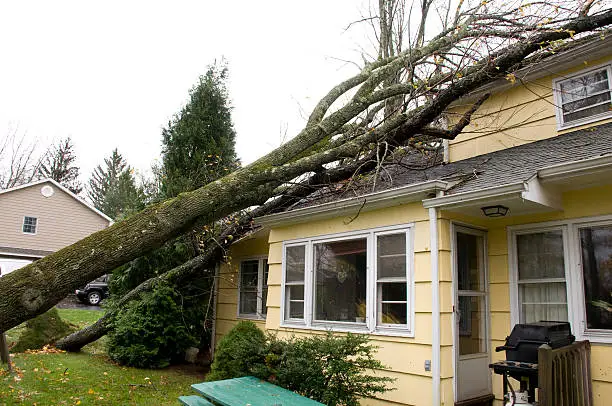
If a tree is on the roof, or a section is open to the sky, this is an emergency and the sequence below compresses. Call for emergency roof repair in Baton Rouge and document while you wait.
How to Assess Roof Storm Damage Without Getting on the Roof
A useful roof assessment after a storm starts at ground level, with binoculars and a phone camera. What you are looking for:
- Missing, lifted or creased shingles. A crease across a shingle means wind lifted it and dropped it back. It is damaged even though it looks present.
- Granules in gutters and at downspout outlets. Heavy granule loss after a single storm indicates impact.
- Displaced ridge caps — the ridge line takes the highest uplift and fails first.
- Bent or detached drip edge and flashing around chimneys, vents and wall junctions.
- Debris impact points where branches struck.
- Fascia, soffit and gutter damage, which often signals wind strong enough to have worked on the roof edge too.
- Attic evidence. Go up with a flashlight and look for daylight, wet insulation and dark staining on the underside of the decking.
What you cannot assess from the ground is fastener withdrawal, underlayment tearing and decking movement — and those are what turn into leaks three months later. That is the reason step four exists.
Document the Damage Before You Touch Anything
This is the step that decides how your claim goes, and it is the one most often done badly.
- Photograph wide, then close. Wide shots establish the whole elevation. Close shots prove the specific damage. An adjuster needs both to connect them.
- Get the date into the record. Phone photos carry timestamps — do not strip them by screenshotting or re-sending through apps that compress metadata.
- Photograph the inside too. Ceiling stains, wet insulation, damaged contents.
- Photograph the debris. The branch on the lawn is evidence of what hit the roof.
- Note the date and time of the storm and keep any local weather reporting for it. The National Weather Service office covering Baton Rouge is NWS New Orleans/Baton Rouge (LIX), and its records establish what actually happened over your address.
- Keep every receipt for tarps, plywood, fans, dehumidifiers and hotel nights. Reasonable emergency mitigation costs are typically reimbursable.
Do not throw anything away, and do not have permanent repairs done before the adjuster has seen it. Removing the evidence removes the claim. Our guide to roof insurance claims in Baton Rouge covers what adjusters look for in more detail.
Prevent Further Damage with Temporary Protection
Once it is documented, stop the water. Louisiana policies require the homeowner to take reasonable steps to prevent damage getting worse, and a carrier can decline the additional damage that happens because you did not.
Temporary measures that count: tarping the affected slope, boarding an opening, moving contents out of the wet area, and running fans or a dehumidifier to slow mold growth in a climate that grows it fast.
Tarping a roof safely is genuinely harder than it looks — it requires walking a wet surface, anchoring against wind that is often still blowing, and knowing which fasteners will not create new leaks. Emergency roof tarping is a service for a reason, and after a named storm it is normally same-day work.
Report the Claim Promptly
Call your carrier as soon as the damage is documented. You will need the date of loss, your policy number, the photographs and a description of what happened.
Two Louisiana specifics worth knowing before you make the call. Hurricane deductibles here are usually a percentage of the insured value rather than a flat dollar amount, so the sum you carry can be considerably larger than your standard deductible. And Louisiana sets statutory time limits both on how quickly an insurer must begin adjusting a loss and on how long you have to file — the Louisiana Department of Insurance publishes current homeowner guidance and takes complaints where a carrier is not meeting them.
Ask for the claim number and the adjuster’s name and direct contact in that first call, and write down who you spoke to and when. Claims that go wrong usually go wrong in the record-keeping.
Schedule a Professional Roof Assessment
Have a licensed roofer inspect the roof before the adjuster visits if you can, and ideally have them present when the adjuster comes. This is not adversarial — it is that a roofer and an adjuster are looking for different things, and damage the adjuster does not see does not get paid for.
A proper post-storm inspection covers the covering, the fastening, flashing and edge metal, the decking condition, penetrations, and the attic side. You should receive photographs and a written assessment, not a verbal summary and a price.
Ryson Roofing provides free inspections across Baton Rouge and the surrounding parishes, and we document the roof whether or not the damage turns out to be claimable.
Begin Repair or Replacement Promptly
Once the claim is settled, move. Delay is expensive in this climate — every rain event after the storm works more water into decking and insulation, and mold establishes in days rather than weeks.
Whether the answer is repair or roof replacement in Baton Rouge depends on how much of the covering is affected. Above roughly 50% of the roof covering, it is a replacement and requires a parish permit with the staged photographic documentation Louisiana Act 239 introduced in August 2025.
One warning specific to post-storm periods. Baton Rouge fills with out-of-state crews after every major event. Before signing anything, confirm the contractor holds a current Louisiana license — required for residential work above $7,500 — carries liability and workers’ compensation cover, has a physical local address, and is pulling the permit themselves. A contractor who asks the homeowner to pull the permit is shifting liability onto you.
How to Protect Your Roof from Storm Damage Next Time
Most storm damage is not random. It concentrates where the roof was already weak.
- Inspect annually before storm season, and after any significant wind event.
- Keep gutters clear. Blocked drainage backs water under the shingle course at the eave, which is where rot starts.
- Trim overhanging limbs. Branches that touch in a breeze become projectiles in a storm.
- Fix small things immediately. A lifted shingle or failing sealant is where the next storm gets its purchase.
- Consider a FORTIFIED roof at replacement. The IBHS standard specifies sealed decking, enhanced fastening and ring-shank nails, and it is designed for exactly this. Homeowners in Livingston and Ascension Parish should check eligibility for the Louisiana Fortify Homes Program, which offers grant funding toward it. See FORTIFIED roofing in Baton Rouge for what the standard involves.
The same maintenance logic applies across every kind of residential roofing Baton Rouge homeowners rely on, and it is far cheaper than the alternative.
Frequently Asked Questions
What should I do first if my roof has storm damage?
Make sure everyone is safe and stay off the roof. Check ceilings from inside for sagging or staining, keep clear of any downed power lines, and photograph the damage from the ground before you cover anything or move debris.
What steps do I take to assess and repair roof damage?
Five, in order: secure people and the interior, assess and photograph the damage from the ground, apply temporary protection such as tarping, report the claim to your insurer, and book a professional roof assessment before repairs begin. Document before you protect, not after.
How do I assess roof storm damage safely?
From the ground with binoculars and a camera, plus a flashlight check in the attic. Look for missing, lifted or creased shingles, displaced ridge caps, granules in gutters, bent flashing, and daylight or wet insulation in the attic. Do not climb a storm-damaged roof.
Should I tarp my roof before or after photographing the damage?
After. Photograph everything first, wide shots and close shots, inside and out. Tarping before documenting hides the evidence your claim depends on, and adjusters can only pay for damage they can see.
How long do I have to file a storm damage roof claim in Louisiana?
Louisiana sets statutory limits on both how long you have to file and how quickly an insurer must begin adjusting the loss. File as soon as the damage is documented rather than waiting, and check current deadlines with the Louisiana Department of Insurance, since delay is the most common reason a valid claim gets disputed.
Will my insurance cover storm roof damage?
Damage from a covered event such as wind, hail or a named storm is generally covered, subject to your deductible. Wear from age is not. In Louisiana a hurricane deductible is usually a percentage of insured value rather than a flat amount, so check your declarations page before assuming the figure.
Can I repair a storm-damaged roof myself?
Temporary measures inside the home are reasonable. Getting on a storm-damaged roof is not — compromised decking gives way without warning. Permanent repairs made before the adjuster inspects can also jeopardize the claim.
How quickly can I get emergency tarping in Baton Rouge?
Emergency tarping is normally same-day, though after a widespread named storm demand across the parish extends it. Call as early as you can rather than waiting to see whether the leak worsens.
Do I need a permit to repair storm damage to my roof?
Small repairs generally do not require one. Once work affects more than about 50% of the roof covering it is a replacement, which requires an East Baton Rouge Parish permit and the sixteen staged photographs Act 239 introduced. Your licensed contractor should pull it.
How do I avoid storm-chasing roofing contractors?
Confirm a current Louisiana contractor license, a physical local address, and liability and workers’ compensation certificates. Ask who pulls the permit — if they say you do, walk away. Be wary of door-knocking crews demanding large deposits immediately after a storm.
Get Your Roof Looked At
The difference between a storm claim that pays and one that argues is almost always documentation, gathered early by someone who knows what a carrier needs to see.
Ryson Roofing inspects storm-damaged roofs across Baton Rouge, Livingston, Ascension and West Baton Rouge Parish, documents the condition in writing with photographs, and can be present when your adjuster visits. Request a free roof inspection, or read more about storm damage roof repair in Baton Rouge.