Ryson Roofing walks Baton Rouge homeowners and businesses through the roof insurance claim process, from documented inspection through adjuster meetings to final depreciation release. Backed by 25+ years of experience and Owens Corning/CertainTeed certifications, they handle supplemental claims and keep documentation adjuster-ready at every step.
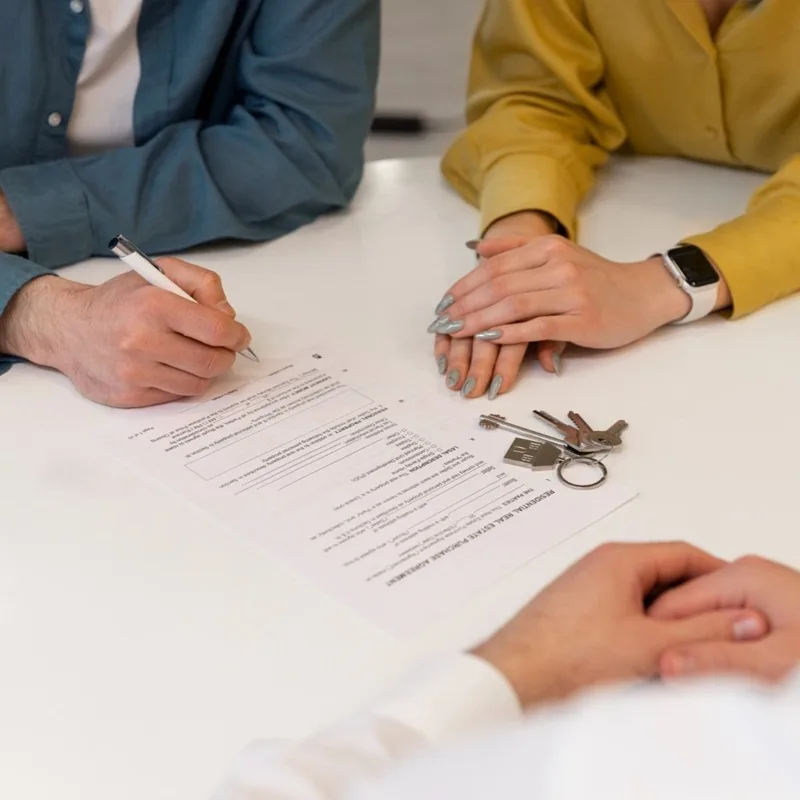
Filing a roof insurance claim can feel like a maze, and never more so than right after a storm. Knowing the steps ahead of time takes out the guesswork and helps you avoid the mistakes that get claims delayed or denied. This guide walks through the roof insurance claim process from the first inspection to the final check, the same process Ryson Roofing has guided Baton Rouge homeowners through for more than 25 years. For the bigger picture on coverage, deductibles, and your rights, see our main roof insurance claims page. If your roof was hit by a storm, start with the storm damage that likely triggered the claim.
Before you call your insurer, have a licensed roofer inspect the roof. A documented, photo-backed inspection tells you whether you have real, claimable damage and how bad it is, so you file with facts instead of a guess. Ryson Roofing provides this inspection free, and the report becomes the backbone of your claim.
Pull your declarations page and check three things: whether your roof is covered at replacement cost (RCV) or actual cash value (ACV), your standard deductible, and your named-storm or hurricane deductible. In Louisiana that named-storm deductible is a percentage of your home’s value, often 2 to 5 percent, so it pays to know the number before you file.
Call your insurance company or use their app to open the claim, and give the date of the storm that caused the damage. Write down your claim number and the adjuster’s contact information. File soon, because Louisiana sets deadlines and fresh damage is easier to prove.
Your insurer sends an adjuster to inspect the roof. This is the most important visit in the process, and you do not have to face it alone. Ryson Roofing meets your adjuster at the property and walks the roof with them, pointing out every area of damage so nothing gets missed or written off. Matching our documentation to theirs is what keeps the approved scope honest.
The insurer issues a scope of work and an estimate. On an RCV policy, the first check is often the actual cash value, the replacement cost minus depreciation and your deductible. Review the scope against our inspection. If items are missing or the amounts fall short, that gap is what a supplement addresses in a later step.
With the claim approved, we complete the roof repair or roof replacement to code, backed by our warranty. If we uncover hidden damage once the old roof is off, or if code upgrades add cost, we document it and file a supplemental claim for the difference, so you are not stuck paying for damage the storm caused.
On a replacement cost policy, the insurer holds back the depreciation until the work is finished. Once we complete the roof, we provide the final invoice, you submit it to your insurer, and they release that recoverable depreciation as a second check. That final payment closes out the claim.
Whether the damage came from hail, wind, or a hurricane, and whether we start with emergency tarping to secure an open roof or a scheduled roof inspection to assess quieter damage, the claim process itself doesn’t change. The same documentation standards, adjuster coordination, and follow-through apply no matter what caused the damage or how it was first discovered, so you always know what to expect once a claim is underway.
It varies. A straightforward claim can move from inspection to approval in a few weeks, while a complex claim, or one filed after a major storm when adjusters are swamped, can take a month or more. Weather, material availability, and supplements all affect the timeline. Filing early and keeping your documentation clean is the best way to keep things moving.
Stage | Typical Timeframe | What Can Slow It Down |
Professional roof inspection | Same day to a few days | Scheduling around your availability |
Filing the claim | Same day | None, this step is quick once damage is confirmed |
Adjuster inspection | 3 days to 2 weeks | High claim volume after a widespread storm |
Scope and settlement review | 1 to 2 weeks after adjuster visit | Disputes over damage extent or missing line items |
Repair or replacement work | 1 to 5 days once materials arrive | Material availability, weather, roof size |
Supplemental claim (if needed) | 1 to 3 weeks | Documentation review by the insurer |
Final invoice and depreciation release | 1 to 2 weeks after work is complete | Insurer processing time |
After a major hurricane or widespread regional storm, every stage in this table tends to run longer than usual, since adjusters, contractors, and material suppliers are all managing a surge in demand at the same time. Filing quickly and keeping documentation organized is the best way to avoid unnecessary delays on your end of the process.
It happens, and it is not always the last word. If the estimate misses damage or the amounts are low, a documented supplement often closes the gap. If a covered claim is denied or stays underpaid, a licensed public adjuster or an insurance attorney can represent you, a role a roofing contractor cannot fill. Ryson keeps providing the roof documentation they need, and we are honest about when it is time to bring one in.
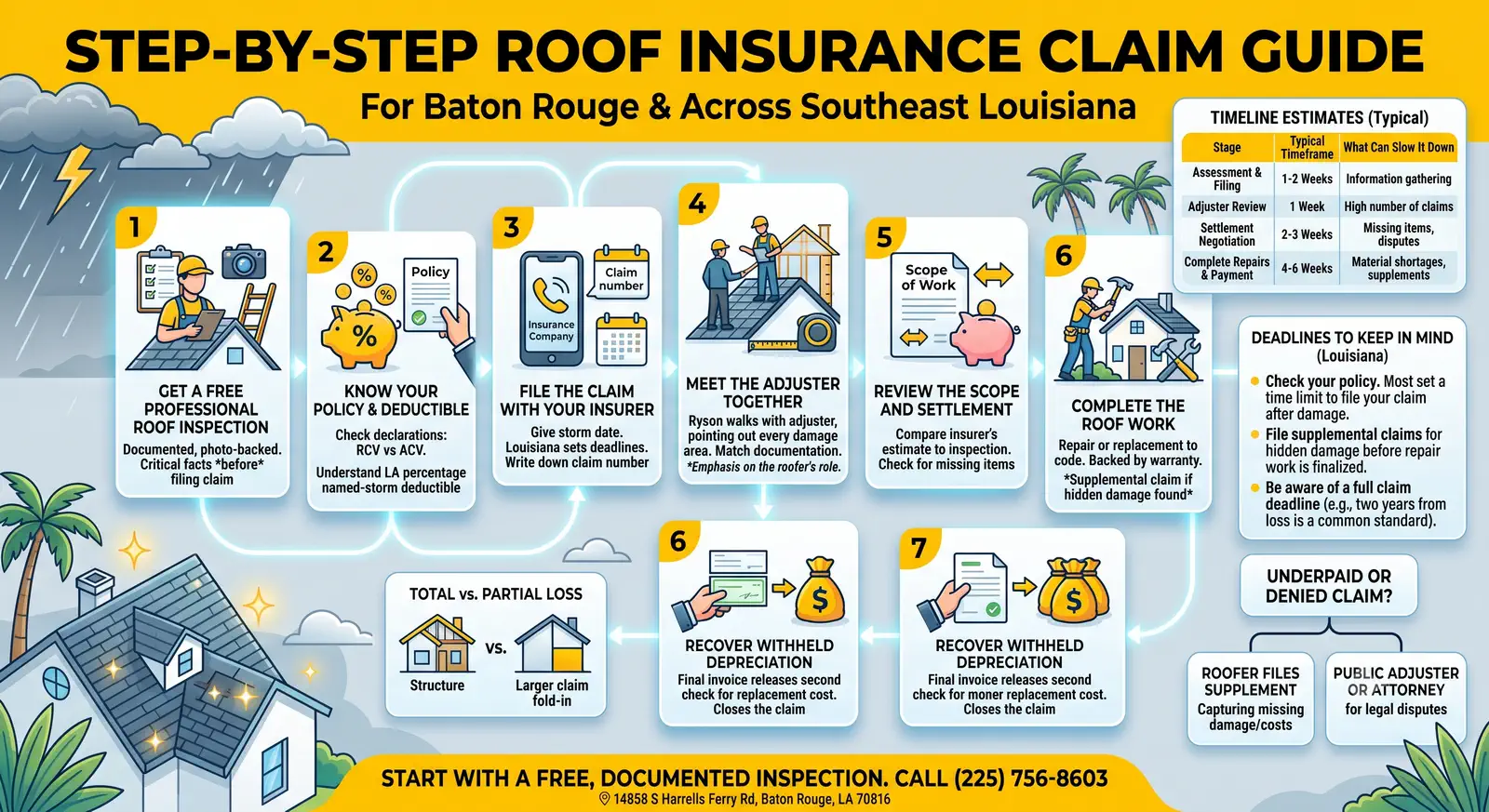
Time limits matter in Louisiana. You have at least 180 days to file a claim after a declared disaster and up to two years to pursue a disputed claim, and your insurer must pay undisputed amounts within 30 days of receiving proof of loss. Your policy also expects you to prevent further damage right away, so document and tarp first. Deadlines vary by policy, so check yours and do not wait. You can review the state’s rules through the Louisiana Department of Insurance.
Most roof claims are partial losses, where the roof is damaged but the rest of the home is intact, and the process above applies directly. A total loss, where damage approaches or exceeds the home’s insured value, gets folded into a much larger property claim instead, with the adjuster inspecting the entire structure and additional living expense coverage often coming into play for temporary housing, details the Insurance Information Institute outlines as part of a standard claim.
If your property has damage beyond the roof, siding, windows, interior water, or structural issues, mention it to your adjuster and to us upfront, since it changes how the claim is scoped. We handle the roof portion either way and can help you see where it fits into the larger claim.

Ryson Roofing brings the same documented inspections, adjuster coordination, and honest guidance to roof insurance claim assistance throughout Baton Rouge and the surrounding parishes, including St. George, Prairieville, Denham Springs, Central, Zachary, Livingston, Walker, Hammond, and Gonzales. For a full view of our coverage, see our service area page. No matter which of these communities your claim comes from, you get the same experienced support behind every step of the process.
The claim process is easier with the right roofer beside you from step one. Ryson Roofing gives you a free, documented inspection, stands with you through the adjuster meeting, completes the work, and closes out the paperwork.
Call (225) 756-8603 or request your free inspection today, and let a local team guide your claim from start to finish.
Address: 14858 S Harrells Ferry Rd, Baton Rouge, LA 70816
Email Address: info@rysonroofing.com
Phone Number: (225) 756-8603
Business Hours:
Monday: Open 24 hours
Tuesday: Open 24 hours
Wednesday: Open 24 hours
Thursday: Open 24 hours
Friday: Open 24 hours
Saturday: Open 24 hours
Sunday: Open 24 hours
It is the smart first move. A documented inspection tells you whether you have claimable damage and how much, so you file with evidence instead of a hunch. It also gives you a report to compare against the adjuster’s findings, and Ryson’s inspections are free.
Not always. If the damage is small and close to your deductible, a claim may not be worth a mark on your record. An inspection helps you weigh the repair cost against your deductible before you file, so you make an informed call.
The adjuster confirms the cause of damage, storm versus wear, and measures the extent. Having your own documentation and a roofer on the roof during the visit helps make sure real damage is counted and tied to the storm.
On a replacement cost policy, the insurer holds back a portion of the payout, the depreciation, until the roof is replaced. Once we finish the work and you submit the final invoice, the insurer releases that held-back amount as a second check.
It is a follow-up request for costs the first estimate missed, such as hidden damage found after the old roof comes off, code-required upgrades, or higher material prices. We document these and submit them so the claim covers the full, true cost of the work.
We handle the roof side start to finish: the inspection, the adjuster meeting, the documentation, the work, and the final invoice. We cannot negotiate the claim as a public adjuster or give legal advice, but for the roofing part of the process, we take it off your plate. For more answers, see our full FAQ.
Call us today at (225) 756-8603 or schedule a free roof estimate online and let Ryson Roofing put a roof over your head that's built to last.