Ryson Roofing provides emergency hurricane roof damage repair in Baton Rouge, from tarping through full replacement, and helps document damage for named-storm insurance claims. Backed by Owens Corning/CertainTeed certifications and 25+ years of experience, they rebuild to the FORTIFIED standard for stronger protection.
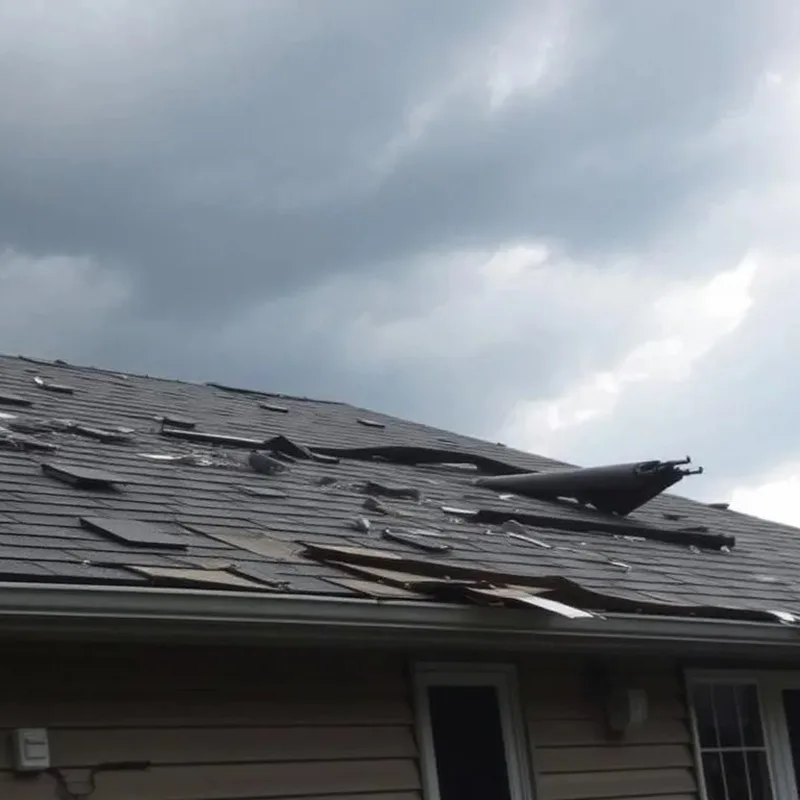
When a hurricane targets the Gulf Coast, Baton Rouge feels it, even 60 miles inland. A storm making landfall as a major hurricane can still drive destructive wind straight across East Baton Rouge and Livingston Parishes, closing roads and stripping roofs across the Capital Region, and past storms have shown that a direct hit isn’t necessary for a hurricane to take your roof. As a roofer in Baton Rouge, Ryson Roofing has put local roofs back together after every major storm for more than 25 years, and we are ready when the next one clears. Hurricane damage is the most severe form of storm damage we repair, alongside hail and wind damage.
A hurricane is not one hazard but several, hitting at once and for hours. That combination is what makes hurricane roof damage so severe:
Because of all that, hurricane damage is seldom a patch job. It often means a full roof replacement and, in severe cases, structural repair.
After a hurricane, once it is safe to look, watch for:
If you see sagging or structural damage, stay out of the affected area and call for a professional inspection right away.
Hurricane roof claims work in a different way from an ordinary wind claim, and the difference can cost thousands. When the National Hurricane Center names a storm, most Louisiana policies switch from the standard deductible, often a flat $1,000 to $2,500, to a separate named-storm or hurricane deductible set as a percentage of your dwelling coverage. That percentage runs about 2 to 5 percent in Louisiana. On a $300,000 home, a 2 percent deductible is $6,000 and a 5 percent deductible is $15,000 out of pocket before coverage responds. One piece of good news: under Louisiana’s single-deductible law, you pay only one named-storm deductible per calendar year, even in a season with several storms.
Ryson helps you get the most from the claim. We document the roof and structure the way adjusters require, meet your adjuster on site, and walk you through the roof insurance claim process and each claim step. Under Louisiana law you have at least 180 days to file after a declared disaster, but claims surge after a hurricane, so file early. You can review named-storm deductible rules through the Louisiana Department of Insurance.
Understanding where a storm falls on the Saffir-Simpson scale helps homeowners gauge how much stress their roof is actually under during a hurricane. Baton Rouge’s design wind standard sits close to the Category 4 threshold, which is worth keeping in mind as a storm approaches.
Category | Sustained Wind Speed | Typical Roof Impact |
Category 1 | 74 to 95 mph | Shingle seal failure, some lifted or missing shingles, minor flashing damage |
Category 2 | 96 to 110 mph | Widespread shingle loss, damaged ridge caps, exposed underlayment in places |
Category 3 (Major) | 111 to 129 mph | Large sections of roof surface stripped, structural stress at edges and connections |
Category 4 | 130 to 156 mph | Severe roof loss, potential deck and structural damage, at or near Baton Rouge’s design wind standard |
Category 5 | 157 mph or higher | Catastrophic roof and structural failure |
This distinction matters after every hurricane. Your homeowner’s policy covers wind damage and the wind-driven rain that enters through a wind-created opening, such as a roof the storm tore open. It does not cover flood, and storm surge and rising water are classified as flood, which needs a separate flood insurance policy. In plain terms, if the storm blew your roof open and rain poured in, that is a roof and wind claim we can help document. If water rose from the ground into your home, that is a flood claim handled through flood coverage. Ryson works the roof and wind side, and we will tell you straight which is which so your claim goes to the right place.
If a hurricane has cost you a roof, the rebuild is the moment to prepare for the next one. A FORTIFIED roof built to the IBHS standard is designed for this exact threat: a sealed roof deck that keeps water out even if shingles are lost, ring-shank nails with about double the holding power, wind-rated shingles, and reinforced edges. Metal roofing that resists 140 mph or more is another strong choice. Louisiana requires insurers to offer premium discounts on FORTIFIED roofs, and the state Fortify Homes program has funded thousands of upgrades with grants of up to $10,000. In a state hit by Katrina, Gustav, Laura, and Ida in a single generation, a stronger roof is one of the best investments a homeowner can make.
Unlike a sudden hailstorm, hurricanes come with days of advance warning, and a few steps taken before the season starts can meaningfully reduce how much damage your roof takes when a storm arrives.
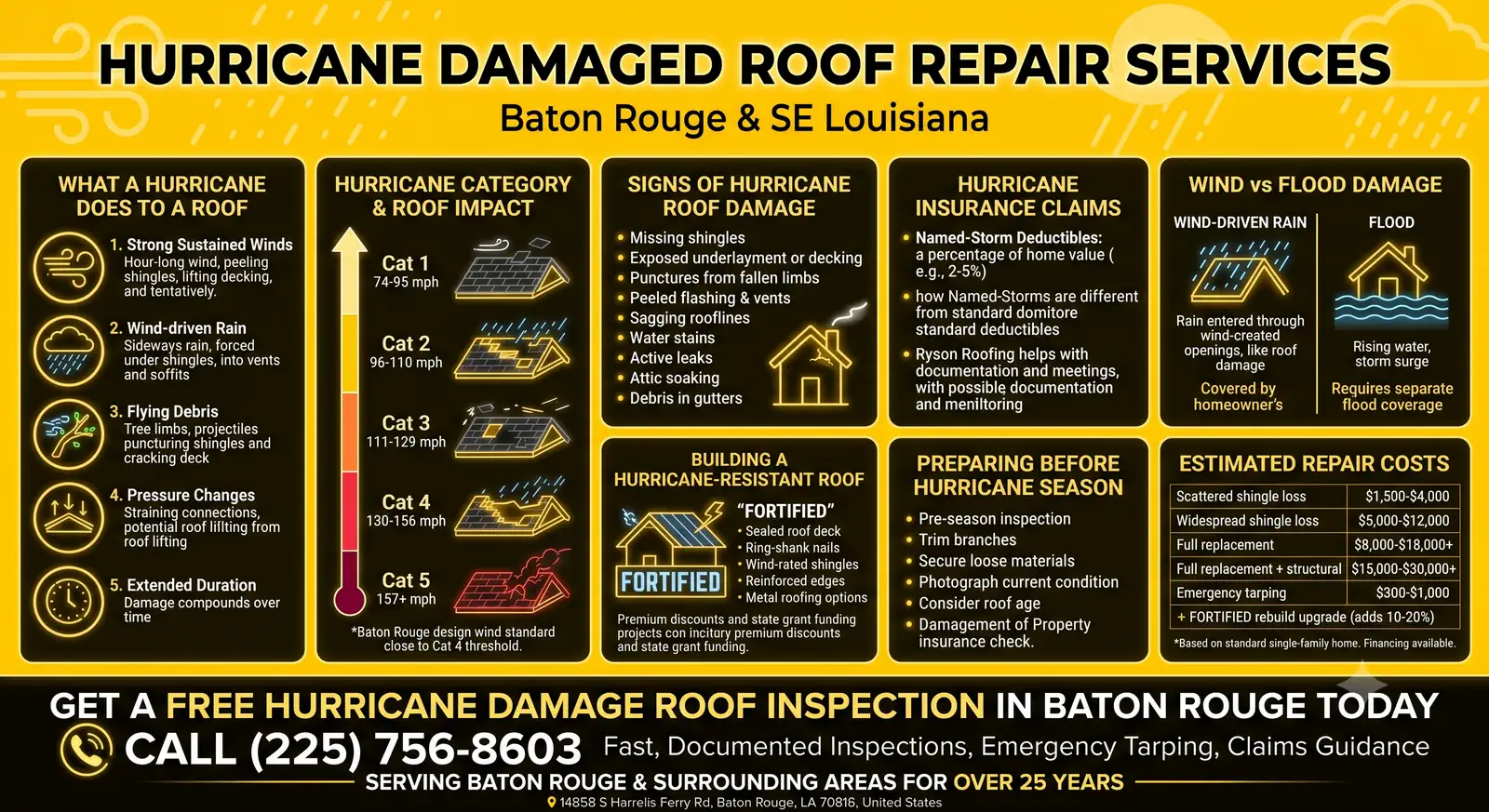
Hurricane repair costs vary widely depending on whether the damage is limited to shingles and flashing or extends to the decking and structure underneath. Use this table as a general starting point, then get a written estimate after your free inspection for an exact number.
Damage Scope | Typical Repair Cost | Common Scope |
Scattered shingle loss, one or two slopes | $1,500 to $4,000 | Targeted shingle and flashing replacement |
Widespread shingle loss across the roof | $5,000 to $12,000 | Full re-shingling with underlayment inspection |
Full roof replacement with sound decking | $8,000 to $18,000 | Complete tear-off and rebuild |
Full replacement with structural or deck damage | $15,000 to $30,000+ | Tear-off, deck repair or replacement, and full rebuild |
Emergency tarping | $300 to $1,000 | Same-day protection to stop water intrusion while a claim is processed |
FORTIFIED rebuild upgrade | Add 10 to 20 percent to base replacement cost | Sealed deck, enhanced nailing, and reinforced edges, often offset by insurance discounts and grant funding |
These figures assume a standard single-family home and can shift based on square footage, roof pitch, and the extent of structural damage found once the roof is opened up. Since hurricane claims often fall under a separate named-storm deductible, we document damage thoroughly to support the true scope of your claim, and roof financing is available if you need to move forward before your claim settles.
Hurricane recovery moves in stages, and here is exactly what to expect from the first call to the finished roof.
A hurricane brings wind and hail together. See our wind damage roof repair and hail damage roof repair pages for those specifics.


Ryson Roofing brings the same rapid emergency response, named-storm insurance experience, and manufacturer-backed warranties to hurricane damaged roof repair throughout Baton Rouge and the surrounding parishes, including St. George, Prairieville, Denham Springs, Central, Zachary, Livingston, Walker, Hammond, and Gonzales. For a full view of our coverage, see our service area page. No matter which of these communities took the hit, your roof gets the same urgent response and thorough documentation behind every hurricane recovery.
When the storm passes, do not wait to find out what it did to your roof. Ryson Roofing gives you a fast, free, documented inspection, emergency tarping if you need it, and the experience to guide your named-storm claim from start to finish.
Call (225) 756-8603 or request your free inspection today, and let a local crew get your home covered again.
Address: 14858 S Harrells Ferry Rd, Baton Rouge, LA 70816
Email Address: info@rysonroofing.com
Phone Number: (225) 756-8603
Business Hours:
Monday: Open 24 hours
Tuesday: Open 24 hours
Wednesday: Open 24 hours
Thursday: Open 24 hours
Friday: Open 24 hours
Saturday: Open 24 hours
Sunday: Open 24 hours
Yes. Wind damage and the wind-driven rain that enters through a storm-created opening are covered, but the claim triggers your named-storm deductible, which is a percentage of your dwelling coverage. Flood and storm surge are not covered by a homeowner’s policy and need separate flood insurance.
It is a separate, higher deductible that applies when the National Hurricane Center names the storm that caused your damage. In Louisiana it runs about 2 to 5 percent of your dwelling coverage, so on a $300,000 home you could pay $6,000 to $15,000 before coverage responds. It replaces your standard deductible for that storm.
Yes. Wind-driven rain and broken seals can leave a roof looking intact while water soaks the deck and attic. A free, documented inspection after a hurricane catches hidden damage and starts your claim on solid ground.
Yes. Our crews stage materials before a forecast storm and cover open roofs as soon as it is safe. Tarping stops the water and protects your home while the claim and permanent repair are arranged.
It depends on the extent. Scattered damage may be repaired, but a hurricane often strips shingles across the roof or damages the deck, which calls for a full replacement. Our inspection gives you an honest recommendation and the documentation for your insurer.
Rebuild to the FORTIFIED standard or choose metal. A FORTIFIED roof adds a sealed deck, enhanced nailing, and reinforced edges, and it can earn a Louisiana insurance discount, with grants available through the state Fortify Homes program.
Call us today at (225) 756-8603 or schedule a free roof estimate online and let Ryson Roofing put a roof over your head that's built to last.