Asphalt roof shingles come in three types: three-tab, architectural (also called dimensional or laminate), and luxury or premium. They differ in how they are built, how long they last, and how much wind they hold. For most homes the real choice is between three-tab and architectural, and architectural wins on every measure except the price on day one.
This guide covers all three, how asphalt shingles are actually made, which ratings matter, and how the answers change in a hot, humid, hurricane-exposed climate like South Louisiana — where roofs age faster than the numbers on the wrapper suggest.
Asphalt Shingle Types Compared
| Type | Construction | Typical life | Life in South Louisiana | Relative cost |
|---|---|---|---|---|
| Three-tab | Single flat layer, cut into three tabs | 15 to 20 years | 12 to 18 years | Lowest |
| Architectural | Two or more laminated layers | 25 to 30 years | 18 to 25 years | Moderate |
| Luxury / premium | Heavier multi-layer, shaped to mimic slate or shake | 30 to 40 years | 25 to 30 years | Highest |
The Louisiana column is lower for a reason that has nothing to do with installation quality. Heat cycling drives the volatile oils out of asphalt and makes shingles brittle; humidity keeps moisture on and under the roof; and prolonged UV degrades the binder. Our guide to how long a roof lasts in South Louisiana covers the mechanism in detail.
Which Asphalt Shingle Should You Choose?
Open the situation that matches yours.
I plan to sell within a few years
| Recommended | Architectural, algae-resistant |
|---|---|
| Why | A new roof removes the buyer’s biggest objection and their insurability problem. Algae resistance keeps it looking new in listing photographs. |
| Skip | Luxury shingles — you will not recover the premium at closing. |
This is my long-term home
| Recommended | Architectural with an impact rating, or standing seam metal |
|---|---|
| Why | Over 30-plus years you will buy two shingle roofs or one metal roof. Insurance discounts on a Class 4 roof compound annually. |
| Also do | Fix attic ventilation at the same time — it affects lifespan more than the shingle does. |
Budget is the binding constraint
| Recommended | Entry-level architectural rather than three-tab |
|---|---|
| Why | Labor, tear-off, disposal and permitting are identical either way, so the gap between the two is smaller than it looks — and architectural buys six to eight more years. |
| Consider | Financing, if the roof is failing. Water damage costs more than the payment. |
Storm and wind resistance is the priority
| Recommended | Class 4 impact-rated architectural, installed to a FORTIFIED standard |
|---|---|
| Why | The shingle rating is only half of it — sealed decking, ring-shank nails and enhanced fastening determine real performance. |
| Check first | Your carrier’s Class 4 discount, and Fortify Homes grant eligibility if you are in Livingston or Ascension Parish. |
Three-Tab Shingles
The original asphalt shingle: a single flat layer with two cutouts creating three visible tabs, giving a uniform flat appearance.
In its favor: lowest cost per square, lighter weight, simple to install and repair.
Against: the shortest life of the three, the lowest wind ratings, a flat look that reads as dated, and less material between weather and decking. Many manufacturers have narrowed their three-tab lines as architectural took over the market, which also means a discontinued color is harder to match for a future repair.
Architectural Asphalt Shingles
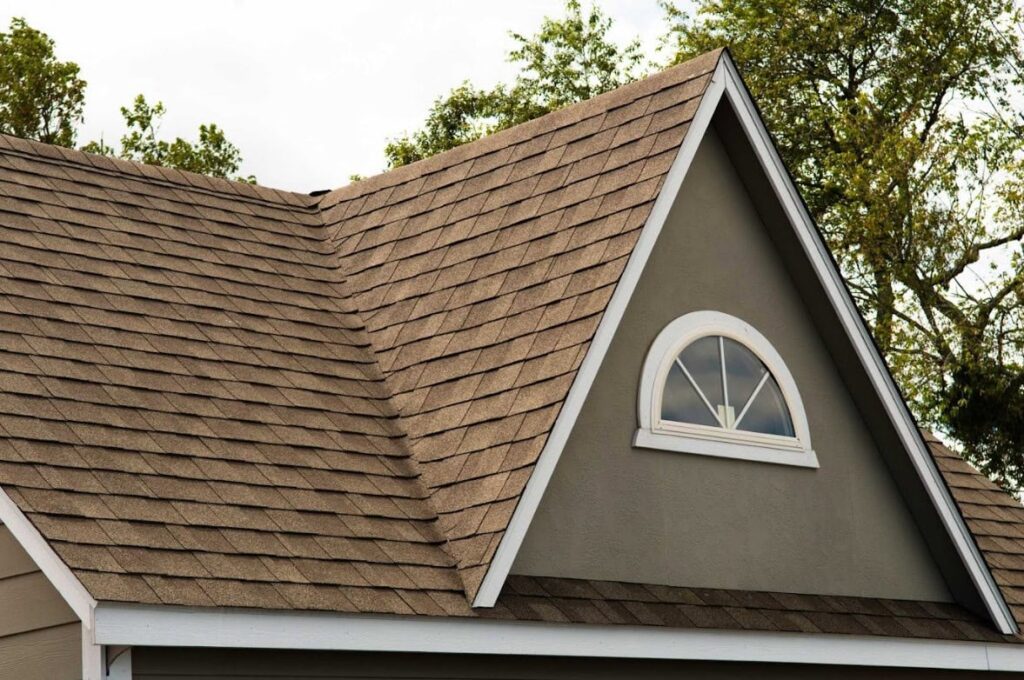
Two or more layers laminated together, creating depth and shadow lines that read as texture from the ground. Architectural asphalt shingles are what goes on the large majority of homes today.
- Longer life — typically six to eight years more than three-tab in this climate
- Higher wind ratings, with enhanced nailing patterns available to raise them further
- Dimensional appearance that also hides minor deck irregularities a flat shingle telegraphs
- The widest product range, including algae-resistant and impact-rated lines
The cost gap over three-tab is narrower than most homeowners expect, because labor, tear-off, disposal and permitting cost the same either way. Spread across the extra service years, architectural is usually the cheaper roof. See our asphalt shingle roofing page for the products we install.
Luxury and Premium Asphalt Shingles
The heaviest asphalt option, shaped and layered to imitate slate or cedar shake at a fraction of the weight and cost of the real material. Luxury asphalt shingles carry the longest warranties and the best wind ratings in the category.
The case for them is aesthetic first and performance second. You pay a significant premium over architectural for appearance, with a modest gain in longevity. Worth it on distinctive architecture, or where an HOA or historic district pushes toward a slate or shake look. Harder to justify on a standard subdivision house.
What Makes the Best Asphalt Shingles
“Best” depends on climate more than brand. Four specifications decide it:
- Wind rating, and critically the fastening pattern used to achieve it. A 130 mph shingle nailed to a standard pattern does not deliver 130 mph.
- Impact rating — Class 1 to Class 4 under UL 2218, with Class 4 the highest.
- Algae resistance, which is a cosmetic issue in dry climates and close to mandatory in humid ones.
- Warranty terms, particularly whether the workmanship warranty is separate from the manufacturer’s, and what voids either.
Brand matters less than most buyers assume. The major manufacturers make comparable products at comparable tiers; the installer determines whether that product performs.
How Asphalt Shingles Are Made
The construction explains the failure modes.
- Base mat. A fiberglass mat forms the structural core. Older organic felt mats have largely disappeared because fiberglass handles moisture better.
- Asphalt saturation. The mat is coated in modified asphalt, which does the waterproofing.
- Granule application. Ceramic-coated mineral granules are embedded while the asphalt is hot. These are not decorative — they shield the asphalt from ultraviolet light, which is what actually destroys it.
- Sealant strip. A heat-activated adhesive strip bonds each course to the one below once the sun warms it. This is what resists wind uplift.
- Cutting and laminating. Architectural and luxury shingles receive their additional layers here.
Two consequences follow. Granule loss is the beginning of the end — once granules go, UV attacks the asphalt directly, which is why granules in your gutters are a real warning sign and why pressure-washing a shingle roof is so damaging. And the sealant strip needs sun to bond, which explains why a newly installed roof can lose shingles in an early storm.
How Long Do Asphalt Shingles Last?
Nationally, 15 to 20 years for three-tab, 25 to 30 for architectural and 30 to 40 for luxury. In South Louisiana, subtract roughly five years from each.
The single largest variable within those ranges is not the shingle — it is attic ventilation. An unventilated attic traps heat that radiates back into the deck, so shingles bake from both sides and age at roughly double the rate. A well-ventilated attic under an ordinary shingle outlasts a sealed attic under a premium one.
Impact-Resistant Shingles and Insurance
Class 4 impact-rated shingles use a modified asphalt formulation or a reinforcing backing that lets the shingle absorb an impact rather than fracture.
The direct benefit is hail resistance. The indirect benefit is often larger: many carriers offer a premium discount for a Class 4 roof, and where insurance costs are high, that discount can recover a meaningful share of the upgrade over the life of the roof. Ask your agent what your specific carrier offers — the answer varies enough to change the decision.
Algae-Resistant Shingles in Humid Climates
The black streaks running down roofs across the Gulf South are Gloeocapsa magma, a blue-green algae that feeds on the limestone filler in asphalt shingles and thrives in heat, humidity and rainfall.
Algae-resistant shingles embed copper granules that inhibit growth, and nearly every manufacturer offers AR versions of their architectural lines at little or no premium. In South Louisiana this should be the default specification, not an upgrade you weigh. Streaking affects appearance and resale long before it affects performance, and prevention costs far less than cleaning.
Color interacts with this — variegated colors hide streaking, solid light colors show it worst. Our guide to roof colors in Baton Rouge covers which hold up visually.
What Changes in South Louisiana
Around Baton Rouge, design wind speeds fall in the 130 to 140 mph range under the 2021 International Residential Code as adopted by the Louisiana State Uniform Construction Code Council. That dictates fastener type, fastener count and edge-metal detail, and it is not optional.
Since Louisiana Act 239 took effect in August 2025, roof replacements in East Baton Rouge Parish also require staged photographic documentation — sixteen photographs across four stages. Our guide to roof permits and inspections in Baton Rouge explains the process.
If storm resistance is the goal rather than a shingle upgrade alone, FORTIFIED roofing specifies sealed decking, enhanced fastening and ring-shank nails as a complete system — and homeowners in Livingston and Ascension Parish should check eligibility for the Louisiana Fortify Homes Program, which offers grant funding toward it. East Baton Rouge Parish is not on the eligible list.
Asphalt Compared With Metal and Tile
| Material | Life in South Louisiana | Cost | Best suited to |
|---|---|---|---|
| Architectural asphalt shingle | 18 to 25 years | Moderate | Most homes |
| Standing seam metal | 40 to 60 years | High | Long-term ownership, maximum heat and wind performance |
| Tile | 40+ years | High | Specific architecture; structure must carry the weight |
Asphalt remains the default because the economics work for a typical ownership period. Metal roofing changes that calculation if you plan to stay a long time, and tile roofing suits particular styles — noting that on a tile roof the underlayment fails decades before any tile does.
What Fails First
Whichever type you choose, the sequence is consistent: granule loss exposes asphalt, UV embrittles it, brittle shingles crack rather than flex under wind, and water reaches the decking. Catching it early is the difference between a repair and a replacement. Asphalt shingle damage in Louisiana covers the signs, and how humidity affects shingles explains why it runs faster here.
Getting the Specification Right
The shingle matters less than most homeowners expect and the installation matters more. Fastening pattern, flashing detail, underlayment and ventilation determine whether a roof reaches the top of its range or the bottom, and none of that is printed on the wrapper.
Ryson Roofing installs asphalt shingle roofing across Baton Rouge and the surrounding parishes, pulls the permits, and specifies to the wind and humidity conditions this region actually presents. See our residential roofing services, read about roof replacement, or get in touch for a free inspection and written assessment.
Asphalt Shingle FAQs
Can you paint asphalt shingles?
No. Painting asphalt shingles is not recommended, and most manufacturers treat it as grounds to void the warranty. Shingles are protected by ceramic-coated granules that shield the asphalt from ultraviolet light, and paint sits on top of those granules rather than bonding to them. It traps moisture, peels within a few seasons, and can accelerate the aging it was meant to disguise. If the color is the problem, replacement is the only durable fix.
How do you clean asphalt shingles?
Use a low-pressure soft wash, never a pressure washer. Pressure washing strips the granules that shield the asphalt from ultraviolet light and can take years off a roof in a single afternoon. A soft wash applies a cleaning solution at roughly garden-hose pressure and rinses gently. In humid climates the dark streaking is usually Gloeocapsa magma algae, and it returns unless the roof is replaced with algae-resistant shingles.
What are asphalt shingles?
Asphalt shingles are roof coverings built from a fiberglass mat saturated in modified asphalt and surfaced with ceramic-coated mineral granules. The mat provides structure, the asphalt provides waterproofing, and the granules shield the asphalt from ultraviolet light. They are the most widely used residential roofing material in the United States because they balance cost, weather performance and ease of installation.
Are asphalt shingles fire resistant?
Most modern fiberglass asphalt shingles carry a Class A fire rating, the highest available under ASTM E108 and UL 790. That rating applies to the complete roof assembly rather than the shingle on its own, so a roof built differently from the tested assembly may not achieve it. Older organic-mat shingles generally rated lower and have largely left the market.
How much does a bundle of asphalt shingles weigh?
A bundle of asphalt shingles typically weighs between 60 and 80 pounds, with heavier luxury products reaching 90 pounds or more. Three bundles usually cover one square, which is 100 square feet of roof, though some architectural and luxury lines require four. Exact weight and coverage vary by manufacturer and product line, so check the wrapper — and confirm the roof structure can carry the load before moving to a heavier shingle.
Are architectural shingles asphalt?
Yes. Architectural shingles, also called dimensional or laminate shingles, are asphalt shingles. The difference from three-tab is construction rather than material: architectural shingles bond two or more asphalt layers together, which creates visual depth, adds weight, and raises wind resistance.
Who makes the best asphalt shingles?
The major manufacturers — Owens Corning, CertainTeed, GAF, TAMKO and Atlas — make comparable products at comparable tiers, so the brand matters less than the specification and the installer. What separates roofs is the wind rating and the fastening pattern used to achieve it, the impact rating, algae resistance, and whether the contractor is certified by the manufacturer. Ryson Roofing is an Owens Corning Preferred Contractor and a CertainTeed ShingleMaster, which allows enhanced warranty coverage that non-certified contractors cannot offer.
Can you install asphalt shingles over an existing roof?
Sometimes, but it is rarely the better choice. Codes generally allow one overlay over a single existing layer, but an overlay hides the decking so nobody can inspect or repair what is underneath, adds weight to the structure, and traps heat that shortens the life of the new shingles. In a hot, humid climate that heat penalty is significant. A full tear-off also allows the staged photographic documentation East Baton Rouge Parish requires under Louisiana Act 239, which an overlay complicates.