Commercial Roof Repair vs. Replacement: An ROI Guide for Building Owners

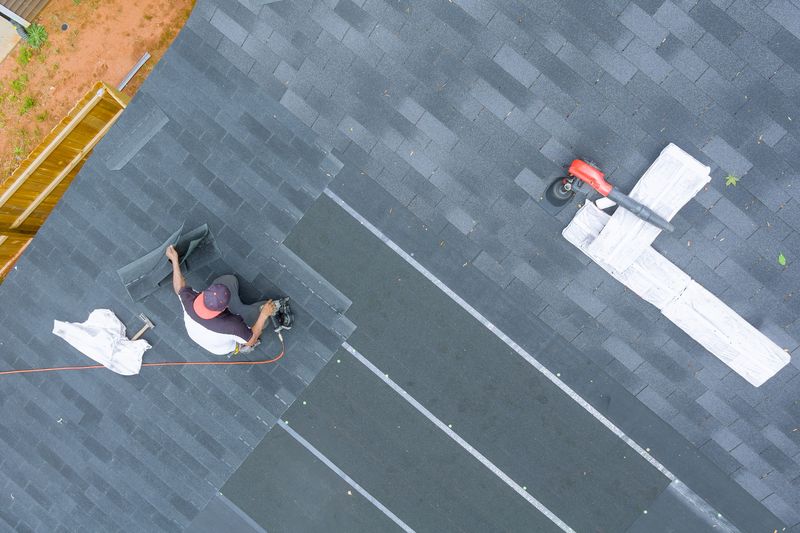
Commercial flat roof installation in progress in Baton Rouge, with new low-slope roofing material being laid over the deck

Repair a commercial roof when the damage is localized and the system still has service life left; replace it when the insulation or deck is wet, when more than about 40 percent of the roof has failed, or when five years of projected repairs approach half the cost of a new roof. The number that settles the argument is not the quoted price. It is the cost per year of service life each option actually buys — and for a commercial building in Baton Rouge, the tax treatment of the two paths is different enough to change the answer on its own.

This guide gives building owners and property managers a straight commercial roof repair vs. replacement framework: the arithmetic behind roof replacement ROI, the condition thresholds that decide full roof replacement vs repairs on commercial buildings, the Louisiana rules that apply, and the tax distinction most repair-or-replace conversations skip.

Repair or Replace: Find Your Scenario

Open the row that matches your roof. Each one gives the recommended action and the reasoning behind it.

Under 25% of the roof is damaged and the system has 8+ years of service life left

Recommended action: repair. When the membrane or panel system is still inside its expected service window and the failure is localized — a punctured section, failed flashing at a curb, open seams over one bay — a targeted repair almost always wins the cost-per-year test.

A repair at this stage buys back the remaining service life for a fraction of a replacement. Document the repair with photographs and a written scope so the work is on record for the next insurance claim or building sale.

What makes this go wrong: repairing the symptom without finding the water’s entry point. Water travels laterally under a low-slope membrane, so the stain inside is rarely below the breach.

Between 25% and 40% of the roof is damaged, or you have had three or more leak calls in two years

Recommended action: get a full condition assessment before spending another dollar on repairs. Repeat leak calls in different locations are the signal that the failures are systemic rather than incidental.

At this threshold the arithmetic usually turns. Run the cost-per-year test in the section below on both options using real numbers from your own building. If cumulative repairs over the next five years approach half the replacement cost, replacement is the cheaper decision.

Also check whether the insulation below the membrane is wet. Saturated insulation does not dry out, it loses R-value permanently, and no surface repair recovers it.

More than 40% of the roof is damaged, or the deck or insulation is saturated

Recommended action: replace. Once water has reached the insulation or the deck, the problem is no longer a surface problem. Wet insulation keeps feeding corrosion at fasteners and deck, and it carries a permanent energy penalty.

Replacement at this stage also resets the manufacturer warranty, which a repair cannot do. A tear-off exposes the deck so structural issues get found and corrected while the roof is open — the only time that inspection is cheap.

Ask specifically whether a tear-off or a recover is being quoted. They are different jobs with different lifespans and different code implications.

The roof is at or past the end of its published service life but is not leaking yet

Recommended action: plan a replacement on your schedule rather than the weather’s. A roof at end of life that is not leaking is the best possible position to be in, because you control the timing, the bidding and the budget year.

This is where the tax treatment matters most. A planned replacement can be placed in service in a chosen tax year, which is what makes Section 179 usable. An emergency replacement after a storm gives you no such control.

Get a written remaining-life estimate with core samples or infrared scanning, not a visual guess, and use it to set the year.

A named storm or hail event caused the damage

Recommended action: document first, then decide. The scope of an insurance-funded repair or replacement is set by what you can prove, and Louisiana puts your insurer on a clock once you file.

Photograph everything before any temporary repair, keep every invoice, and get an independent assessment rather than relying only on the adjuster’s scope. Under Louisiana Revised Statute 22:1892 an insurer must begin adjusting the loss within 14 days of notice and pay within 30 days of satisfactory proof of loss, with penalties for failure to do so.

The repair-or-replace question does not disappear in a claim — it becomes a negotiation over scope, which is why an independent condition assessment is worth more here than anywhere else.

These thresholds are decision starting points, not substitutes for a condition assessment on your specific building. Roof area, deck type, insulation condition and code requirements all move the line.

The one calculation that decides repair or replacement

Comparing a $14,000 repair quote to a $180,000 replacement quote tells you almost nothing, because the two prices buy different amounts of time. Divide each option by the years of service life it delivers and the comparison becomes real.

Cost per year of service life = total cost ÷ years of reliable service the option adds.

Here is the same building run both ways. Substitute your own square footage and quotes; the structure of the comparison is what matters.

Line itemRepair pathReplacement path
Up-front cost$14,000 repair now$180,000 tear-off and new system
Service life added6 years of remaining life restored22 years, warranted
Expected repairs in that window$18,000 across years 2–6Maintenance only
Total cost of the path$32,000$180,000
Cost per year of service$5,333$8,182
Tax treatmentGenerally deductible in the year paidCapitalized, but potentially expensed under Section 179

On these numbers the repair path is cheaper per year, and repair is the right call. Change one input — make the expected repairs $60,000 instead of $18,000, or the restored life 3 years instead of 6 — and replacement wins outright. That sensitivity is exactly why a guess about remaining service life is the most expensive assumption in the whole decision, and why the estimate should come from core samples or an infrared moisture scan rather than a walk-around.

Framed as a roof replacement ROI question, this is the same comparison every commercial owner ends up running: does full roof replacement vs repairs on a commercial building return more per dollar across the years each option actually buys? The answer moves with two inputs — remaining service life and projected repair spend — not with the headline price on either quote.

Two costs belong in the repair column that owners routinely leave out: business interruption and damage to what is under the roof. A warehouse serving the Port of Greater Baton Rouge holding racked inventory, or a medical or light-manufacturing building where a leak shuts down a room, can lose more in one wet week than the price difference between the two quotes.

Flat commercial roof in Baton Rouge with roof vents and skylight curbs, the penetrations where low-slope roof leaks most often begin
Vents, curbs and skylights are the most common leak origins on a low-slope commercial roof. A repair that fixes the flashing at these penetrations often buys years of service life.

When repairing a commercial roof is the better investment

Repair is the better investment when the failure is local and the system is not old. Specifically:

  • The damage is confined to under a quarter of the roof area and traces to identifiable points — flashing at a curb, a punctured section, open seams over one bay.
  • The system has at least eight years of published service life remaining and the insulation below it is dry.
  • Leak history is thin — one or two calls, in the same area, with a diagnosed cause.
  • The roof is under an active manufacturer warranty that a qualified repair will not void. Repairs performed by an uncertified contractor can void it, which is why manufacturer certifications matter more on a commercial repair than most owners assume.

Repair also wins when timing beats economics. If a replacement belongs in next year’s capital budget, a competent repair that carries the roof through hurricane season is the correct interim decision, not a compromise.

Warning signs that point toward full replacement

These are the conditions where continuing to repair costs more than replacing:

  • Wet or compressed insulation. Saturated insulation does not dry. It loses R-value permanently and keeps corroding fasteners and deck beneath an otherwise sound-looking surface.
  • Deck deterioration. Soft spots underfoot, rusted steel deck or delaminated plywood mean the failure has passed the membrane entirely.
  • Widespread membrane failure. Alligatoring, brittleness, shrinkage pulling seams apart, or granule loss across the field rather than in patches.
  • Three or more leak calls in two years in different locations. Scattered leaks indicate a system at end of life, not a series of unrelated incidents.
  • Standing water 48 hours after rain. Ponding signals deflection or failed drainage, and it accelerates every other failure mode.
  • The roof is past its published service life. At that point every repair is spent on borrowed time.

Several of these appear together far more often than singly. Our breakdown of common commercial roofing problems in Baton Rouge covers how these failures develop in this climate specifically.

Five factors building owners consider before replacing a commercial roof

1. Initial investment and cost per square

Commercial roofing is priced per square (100 square feet), and the spread between systems is wide enough that the system choice moves the total more than the contractor choice does. Get quotes that itemize tear-off, deck repair, insulation, membrane or panel, flashing and warranty separately — a single lump sum makes bids impossible to compare and hides where a low number is coming from.

2. Remaining service life and the cost-per-year test

This is the factor that decides the outcome, and the one most often estimated rather than measured. A remaining-life figure should come from core cuts, infrared scanning or moisture meter readings. A visual inspection can confirm a roof is failing; it cannot reliably tell you how many years a repair will buy.

3. Energy performance and cooling load

In a climate where cooling dominates the annual energy bill, membrane color and insulation R-value are not cosmetic choices. Replacing a dark, under-insulated assembly with a reflective membrane over correctly specified insulation reduces the cooling load for the life of the roof. A repair leaves that saving on the table — and if the existing insulation is wet, the building is already paying an energy penalty every month.

4. Maintenance frequency and downtime

Count the true annual cost of the current roof: service calls, interior repairs, ceiling tiles, temporary patching, staff time coordinating access, and any hours a space was unusable. Owners are consistently surprised by this total once it is written down, and it is the number that most often tips a borderline decision toward replacement.

5. Tax treatment: repair deduction versus Section 179

A repair that keeps the building in ordinary operating condition is generally deductible in the year it is paid. A full replacement is generally treated as a capital improvement and depreciated — unless Section 179 applies, in which case the cost may be expensed in the year the roof is placed in service. That difference is significant enough to belong in the comparison rather than as an afterthought, and it is covered in the next section.

Section 179 and commercial roofs: what the tax code says

Yes, a roof on nonresidential real property can qualify for Section 179 expensing. Section 179 of the Internal Revenue Code defines qualified real property to include improvements to nonresidential real property placed in service after the building itself was first placed in service, and it names roofs explicitly alongside HVAC, fire protection and alarm systems, and security systems.

For tax years beginning in 2026, the IRS sets the maximum Section 179 deduction at $2,560,000, phasing down once the total cost of qualifying property placed in service in the year exceeds $4,090,000.

ConditionWhat it means for your roof
Nonresidential real propertyThe building must be commercial. A roof on a residential rental building is treated differently.
Placed in service after the building wasA replacement roof on an existing building qualifies. A roof installed as part of original construction does not fall under this provision.
Used in an active trade or businessThe deduction is limited to taxable income from the active conduct of a trade or business.
Placed in service during the tax yearCompletion timing controls which year the deduction lands in — which is why a planned replacement is worth more than an emergency one.

Two practical consequences follow. First, the year a roof is completed is a decision, not an accident, and it is worth coordinating with your accountant before the work is scheduled. Second, the annual limits are adjusted for inflation and the rules have changed more than once in recent years, so confirm current figures and your own eligibility with a CPA rather than relying on any contractor’s summary — including this one. Ryson Roofing installs roofs; we do not give tax advice.

Commercial roof service life by system

Service life drives the cost-per-year calculation, so it is worth knowing what the system on your building is actually rated for. These are typical service ranges for properly installed and maintained systems; manufacturer warranty terms and local exposure both move them.

SystemTypical service lifeNotes for Gulf Coast buildings
TPO single-ply15–25 yearsReflective surface helps with cooling load; seam quality is the main failure point.
PVC single-ply20–30 yearsStrong chemical and grease resistance, which matters on restaurant and process buildings.
EPDM rubber20–30 yearsDurable and repairable; dark membranes absorb heat unless a coating is specified.
Modified bitumen15–20 yearsMulti-ply redundancy is an advantage on roofs with heavy foot traffic.
Built-up roof (BUR)20–30 yearsCommon on older Baton Rouge commercial stock; many are now past service life.
Standing seam metal40–50+ yearsLongest cost-per-year performance; fastener and panel movement details decide the outcome.
Pitched commercial shingle20–30 yearsSizeable share of local commercial buildings; see our notes on pitched commercial roofing.

What Baton Rouge weather does to the arithmetic

National service-life averages understate what a Gulf Coast roof goes through, and the gap shows up in the cost-per-year math.

Baton Rouge receives a normal annual precipitation of 61.94 inches, according to the National Weather Service office in New Orleans/Baton Rouge — close to double the national average. That volume of water finds every marginal detail on a low-slope roof, and it arrives in intense bursts that overwhelm drains that were adequate when the building was new. Combine it with sustained high humidity, a long high-UV cooling season, and periodic named-storm wind, and the practical result is that a roof detail that would be a minor deficiency in a drier climate becomes an active leak here.

Local building stock matters too. Much of the commercial inventory along the Airline Highway (US 61) and Florida Boulevard corridors, and the light-industrial and warehouse buildings serving the Mississippi River industrial corridor and the Port of Greater Baton Rouge, was built with low-slope built-up or early single-ply assemblies in the 1970s through 1990s. A large share of those roofs are now at or past service life at the same time — which is why so many Baton Rouge owners are having this repair-or-replace conversation in the same few years.

Service area context matters for scheduling as well. Buildings in East Baton Rouge Parish, the City of St. George, and the municipalities of Zachary, Baker and Central each answer to a different permitting office, and West Baton Rouge, Livingston and Ascension parishes each run their own. Our guide to roof permits and inspections in Louisiana explains which office holds jurisdiction where, and it is the most common source of avoidable schedule slip on a commercial job.

Aerial view of a Baton Rouge commercial building roof, the type of low-slope and pitched commercial roof stock Ryson Roofing assesses for repair or replacement
A roof condition assessment covers the whole assembly — membrane or panel, flashing, insulation and deck — not just the visible surface.

What a professional roof condition assessment must include

A commercial condition assessment that only looks at the roof surface is not an assessment. The information the repair-or-replace decision depends on — remaining service life, insulation condition, deck integrity — sits below the membrane. A report worth paying for covers, at minimum:

  1. Core samples or infrared moisture scanning to establish whether insulation is wet and how far the saturation extends.
  2. Deck condition at representative locations, including fastener pull-out where the deck is steel.
  3. Drainage performance — drain and scupper condition, ponding locations, and whether slope is still adequate.
  4. Every penetration and termination — curbs, vents, skylights, HVAC units, parapet and wall flashings, which is where most low-slope leaks originate.
  5. Remaining service life in years, stated as a number with the evidence behind it.
  6. Both options priced — repair scope and replacement scope, so the cost-per-year comparison can actually be run.
  7. Photographic documentation tied to locations on a roof plan, which is also what an insurance claim will require later.

An assessment that produces a replacement quote and nothing else has skipped the analysis, and any commercial roofer in Baton Rouge should be willing to put the evidence behind their recommendation in writing. If you are choosing between providers, our checklist of what to verify before selecting a commercial roof replacement contractor covers the documentation to ask for. A professional roof inspection is the starting point for either path.

Louisiana rules that apply to commercial roof work

Two Louisiana requirements change how a commercial roof project runs, and both differ from the residential rules owners may already know.

Licensing thresholds are different for commercial work. Under Louisiana Revised Statute 37:2150.1, a state contractor license is required for commercial construction work of $50,000 or more, while improvements or repairs to an existing residential structure trigger the licensing requirement at $7,500. Most commercial roof replacements clear the $50,000 threshold comfortably, so verifying a contractor’s license status with the Louisiana State Licensing Board for Contractors is not optional diligence — it is a condition of the work being lawful. Ryson Roofing holds Louisiana contractor license number 52099.

Insurance timelines are set by statute. If storm or hail damage is behind the decision, Louisiana Revised Statute 22:1892 requires an insurer to begin adjusting the loss within 14 days of receiving notice of the claim and to pay within 30 days of receiving satisfactory proof of loss, with statutory penalties for failure to meet those deadlines. Our guide to storm damage insurance rights in Louisiana covers the process in detail, and knowing the deadlines changes how a claim negotiation goes.

Work also has to meet the Louisiana State Uniform Construction Code, including wind-uplift requirements for the building’s location — a factor that can rule out a recover and require a full tear-off, which is one more reason the assessment has to come before the budget.

When to schedule commercial roof work in Baton Rouge

Timing affects both the price and the risk of a commercial roof replacement. Three considerations:

  • Before hurricane season, not during it. Work completed ahead of the season avoids emergency pricing, contractor scarcity after a regional event, and the risk of an open roof when a system develops in the Gulf.
  • With the tax year in mind. Because Section 179 turns on the year the roof is placed in service, completion date has a financial consequence. Coordinate it with your accountant before scheduling, not after.
  • Ahead of a lease turnover, refinance or sale. A documented new roof with a transferable manufacturer warranty is a due-diligence asset. A roof at end of life is a negotiating point for the other side.

If the roof is not leaking yet, you hold all of the scheduling leverage. That position is worth using while you still have it.

Balancing budget and building performance

The lowest bid and the best investment are rarely the same document. Where the two most often diverge:

  • Insulation specified to code minimum rather than to the building’s cooling load. The incremental cost is small and the saving runs for the life of the roof.
  • Recover instead of tear-off, chosen on price alone. A recover over wet insulation buries the problem and shortens the new system’s life. Sometimes a recover is the right call; it should be a decision made on moisture-survey evidence, not on the quote.
  • Warranty scope. A material-only warranty and a full system warranty covering workmanship are different products. Ask what is covered, for how long, by whom, and whether it transfers on sale.
  • Deferred maintenance after installation. A new roof without a maintenance program will not reach its rated service life, which quietly destroys the cost-per-year case that justified it.

For more on how these choices play out on specific systems, see our commercial roofing FAQs, and our breakdown of roof replacement cost in Baton Rouge for how pricing is built up.

What to look for in a commercial roofing service provider

A commercial roofing service provider should be able to produce a current state license, manufacturer certification for the system being installed, proof of general liability and workers’ compensation coverage, and a written condition assessment that prices both repair and replacement. Without those four, you are choosing on price alone.

  • License verified, not claimed. Check the number against the Louisiana State Licensing Board for Contractors register rather than accepting a line on a proposal.
  • Manufacturer certification for the specific system. A commercial re-roof warranty is only as good as the installer’s standing with the manufacturer, and an uncertified crew can void it outright.
  • A written scope that names the assembly. Membrane or panel type, insulation type and thickness, fastening pattern and flashing details — not “new roof system.”
  • References on comparable buildings. Commercial re-roofing on a warehouse is not the same work as a retail strip or a medical office, and the details that fail are different.
  • Insurance certificates issued to you. Current, naming your building, not a generic copy kept on file.

Get a commercial roof ROI assessment in Baton Rouge

Ryson Roofing assesses commercial roofs across East Baton Rouge, West Baton Rouge, Livingston and Ascension parishes and prices both paths — repair and replacement — so the cost-per-year comparison can be run on your building’s real numbers rather than on averages. We are a licensed Louisiana roofing contractor (license number 52099), an Owens Corning Preferred Contractor and a CertainTeed ShingleMaster, based at 14858 S Harrells Ferry Rd, Baton Rouge, LA 70816.

If your building’s roof is generating repeat service calls, is approaching the end of its service life, or took damage in a storm, a documented condition assessment is the cheapest step in the entire decision. Learn more about our commercial roofing Baton Rouge services, or request an assessment for your property.

Commercial Roof Repair vs. Replacement FAQs

What factors should building owners consider before replacing a commercial roof?

Building owners should weigh five things before replacing a commercial roof: the remaining service life of the existing system, whether the insulation and deck are wet, the projected cost of repairs over the next five years, the energy penalty the current assembly is carrying, and the tax year the new roof would be placed in service.

The decision usually turns on the second and third items. If the insulation is saturated, no surface repair recovers it, and replacement becomes the cheaper path regardless of the quoted difference. If cumulative repairs over five years approach half the replacement cost, replacement wins on arithmetic alone.

Repair when the damage covers less than about a quarter of the roof, the system still has eight or more years of published service life, and the insulation below it is dry. Replace when the insulation or deck is wet, when more than about 40 percent of the roof has failed, or when you have had three or more leak calls in different locations within two years.

Between those two thresholds, get a condition assessment with core samples or an infrared moisture scan before spending another dollar on repairs. Scattered leaks in different locations point to a system at the end of its life rather than a series of unrelated incidents.

Divide the total cost of each option by the years of reliable service it buys, then compare the two figures. A $14,000 repair that restores six years of life and carries $18,000 of expected repairs in that window costs $32,000 over six years, or about $5,333 per year. A $180,000 replacement warranted for 22 years costs about $8,182 per year.

Two costs belong in the repair column that owners routinely leave out: business interruption, and damage to inventory or equipment under the roof. On a warehouse or a medical building, one wet week can cost more than the difference between the two quotes.

Yes. Section 179 of the Internal Revenue Code defines qualified real property to include improvements to nonresidential real property placed in service after the building itself was first placed in service, and it names roofs explicitly alongside HVAC, fire protection and alarm systems, and security systems.

For tax years beginning in 2026, the IRS sets the maximum Section 179 deduction at $2,560,000, phasing down once qualifying property placed in service during the year exceeds $4,090,000. Because the deduction turns on the year the roof is placed in service, completion timing has a financial consequence — coordinate it with your accountant before the work is scheduled. Confirm current figures and your own eligibility with a CPA.

Typical service life runs 15 to 25 years for TPO, 20 to 30 years for PVC and EPDM, 15 to 20 years for modified bitumen, 20 to 30 years for built-up roofing, and 40 to 50 years or more for standing seam metal.

Those ranges assume regular inspection and maintenance. A roof left unchecked will not reach the low end of its range, and deferred maintenance is what most often destroys the cost-per-year case that justified the installation. On the Gulf Coast, nearly 62 inches of annual rain, sustained humidity and a long high-UV season all push systems toward the lower end of their published life.

Look for four things: a current state contractor license you verify yourself against the Louisiana State Licensing Board for Contractors register, manufacturer certification for the specific system being installed, current proof of general liability and workers’ compensation coverage issued to your building, and a written condition assessment that prices both repair and replacement.

The written scope should name the assembly — membrane or panel type, insulation type and thickness, fastening pattern, flashing details — not just “new roof system.” Ask for references on comparable buildings, since re-roofing a warehouse is different work from a retail strip or a medical office.

A recover costs less up front because it skips the tear-off, but it is only the cheaper option when the insulation below is dry and code allows it. Installing a new membrane over wet insulation buries the problem, shortens the new system’s life and leaves the energy penalty in place.

Decide it on moisture-survey evidence, not on the quote. Ask any contractor to state plainly whether they are pricing a recover or a tear-off, and to show the core samples or infrared scan behind that recommendation. Wind-uplift requirements under the Louisiana State Uniform Construction Code can also rule out a recover on their own.

Yes, for commercial construction work of $50,000 or more. Louisiana Revised Statute 37:2150.1 sets the state licensing threshold at $50,000 for commercial work, compared with $7,500 for improvements or repairs to an existing residential structure.

Most commercial roof replacements clear $50,000 comfortably, so verifying license status is a condition of the work being lawful rather than optional diligence. Check the license number against the Louisiana State Licensing Board for Contractors register rather than accepting a line on a proposal. Ryson Roofing holds Louisiana contractor license number 52099.

Coverage depends on your policy and the cause of loss, but the timeline is set by statute. Louisiana Revised Statute 22:1892 requires an insurer to begin adjusting a loss within 14 days of receiving notice of the claim and to pay within 30 days of receiving satisfactory proof of loss, with statutory penalties for missing those deadlines.

The scope of what gets funded is set by what you can prove, so photograph everything before any temporary repair, keep every invoice, and get an independent condition assessment rather than relying only on the adjuster’s scope. In a claim, the repair-or-replace question becomes a negotiation over scope.

Before hurricane season rather than during it. Work completed ahead of the season avoids emergency pricing, contractor scarcity after a regional storm, and the risk of an open roof when a system develops in the Gulf.

Two other timing factors matter. Because Section 179 turns on the year the roof is placed in service, the completion date has a tax consequence worth coordinating with your accountant first. And scheduling ahead of a lease turnover, refinance or sale turns the roof into a due-diligence asset instead of a negotiating point for the other side.

Latest Articles & News