Ryson Roofing provides emergency roof tarping in Baton Rouge, installing heavy-duty, ridge-anchored tarps that protect homes for up to 90 days after storm damage. Backed by 25+ years of experience and Owens Corning/CertainTeed certifications, they document damage for insurance claims and complete permanent repairs.
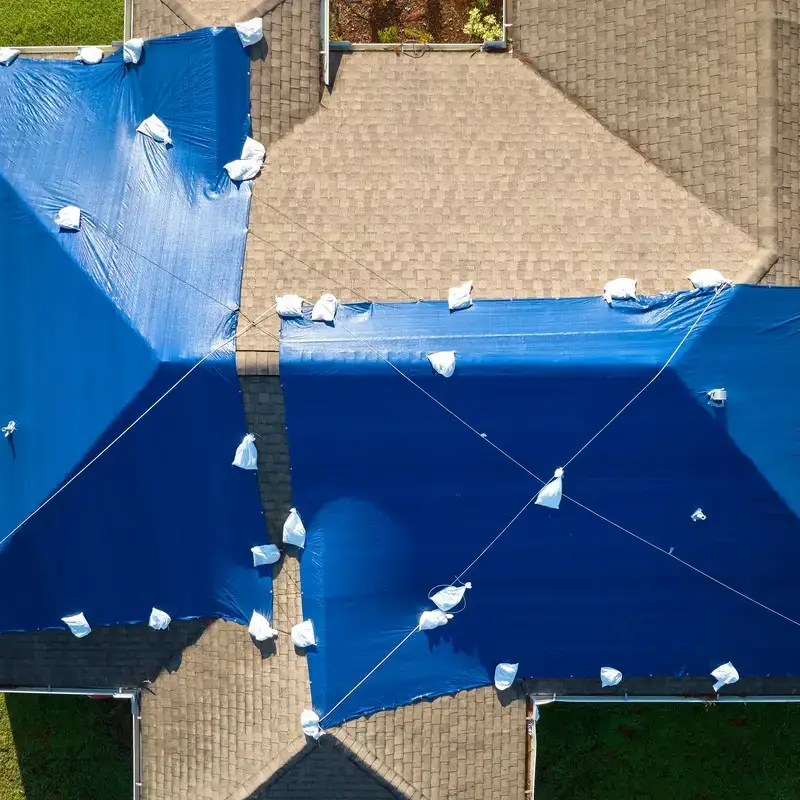
When a storm tears open your roof, the clock starts the moment the rain finds the hole. Roof tarping is the fastest way to stop it. A heavy-duty tarp, anchored the right way, seals the damage and keeps water out of your home until a permanent repair can be scheduled. As a roofer in Baton Rouge, Ryson Roofing installs emergency roof tarps across the area, often the same day, so a torn roof does not become a ruined ceiling. For more than 25 years we have covered Capital Region roofs after storms, and tarping is often the first move we make. It works hand in hand with our emergency roof repair service and the rest of our storm damage work.
Once a roof is open, whether from missing shingles, a fallen limb, or storm-torn flashing, the clock starts running. Water finds its way into insulation, drywall, and framing within hours, and mold can begin forming in as little as 24 to 48 hours in Louisiana’s heat and humidity, a timeline the U.S. Environmental Protection Agency specifically warns homeowners about after any water intrusion. A properly installed tarp is what stands between that opening and the interior damage that follows, buying you the time to arrange a permanent repair without the roof getting worse in the meantime.
There’s also a practical insurance reason to tarp quickly. Most homeowner policies require you to take reasonable steps to prevent further damage after a loss, and emergency tarping is exactly the kind of measure insurers expect and reimburse. Skipping it, or relying on a loose tarp that blows off in the next gust, can leave you covering additional damage out of pocket that a proper tarp would have prevented. A well-anchored tarp protects your home and strengthens your claim at the same time.
Tarping is the right call any time a roof is open to the weather and cannot be repaired the same day. You likely need it when you have:
If the roof is open and weather is coming, a tarp today is far cheaper than the water damage tomorrow.
Understanding exactly what a tarp accomplishes helps set the right expectations while you wait for the permanent repair.
Tarping is a critical first step, not a finished job. We treat it as a bridge to permanent repair, not a substitute for one.
Not all tarps are equal, and the thin blue tarp from a big-box store is not built for a Louisiana storm season. A proper roof tarp is heavy-duty, water-resistant, and UV-stabilized so the sun does not turn it brittle in a few weeks. We use reinforced polyethylene sheeting, thick and woven for tear resistance, not the light material that shreds at the first grommet. The right tarp, sized with enough overlap and anchored over the ridge, is what separates a cover that lasts for weeks from one that flaps loose in the next thunderstorm. The material matters as much as the method, and we bring both.
Done right, a roof tarp is a small construction job, not a bedsheet held down with bricks. Here’s what goes into an installation built to actually hold.
Done this way, a professional tarp holds through wind and rain until the permanent repair is ready to begin.
Good documentation is what turns a tarping call into a strong insurance claim. Here is what we capture during every emergency tarping visit.
Documentation Item | What It Shows |
Wide-angle photos of the damaged area before tarping | The full extent of the storm damage as it was found, before any covering goes on |
Close-up photos of the specific opening or failure point | Clear evidence of what caused the intrusion, whether it’s missing shingles, a puncture, or lifted flashing |
Photos of the tarp installation in progress | Proof that a professional, code-appropriate method was used rather than a temporary DIY fix |
Final photos of the completed, secured tarp | Confirms the property was properly protected against further damage |
Measurements of the affected area | Supports the scope of work claimed and helps estimate the eventual permanent repair |
Itemized invoice for the tarping service | The receipt insurers need to reimburse emergency mitigation costs under your policy |
Date and time of service | Establishes how quickly you acted to prevent further damage after the loss |
We provide this documentation as part of every emergency tarping call, so you have everything you need on hand before your adjuster ever asks for it.
A tarp is a bridge, not a destination. A well-installed, heavy-duty roof tarp can protect your home for up to 90 days, long enough to work through an insurance claim and schedule the permanent repair. Thin big-box tarps often fail in a week or two, which is one more reason material and installation matter. Sun, heat, and repeated storms wear any tarp down over time, so the goal is always to move from tarp to a finished roof as soon as the claim and schedule allow. If the permanent repair will take longer than expected, we can check and refresh the tarp so your home stays protected in the meantime.
Tarping is not just damage control, it is often required by your policy. Most homeowner policies include a duty to prevent further damage after a loss, and the cost of reasonable emergency measures like tarping is often reimbursable and counts toward your claim, a step the Insurance Information Institute outlines as part of the standard claims process. Ryson documents the damage and the tarp with dated photos and an itemized record, so you have what your adjuster needs, and we carry that documentation straight into the roof insurance claim process and each claim step. Keep your receipts, and let us handle the rest.
A tarp buys time, but it does not fix the roof. Once your home is protected, we schedule a full, documented roof inspection to map every point of damage, then complete the permanent roof repair or, when the damage is widespread, a full roof replacement, built to code and backed by our warranty. Because the same crew handles the tarp and the rebuild, nothing gets lost between the emergency and the finished roof.
Tarping is the first step after most storms, and the permanent fix comes next. See our emergency roof repair service, or the pages on wind damage, hail damage, and hurricane roof damage.
Tarping costs depend on the size of the opening, the roof’s pitch, and how much labor the installation requires. Use this table as a general starting point, then get a firm number when we assess the damage in person.
Tarping Scope | Typical Cost | Common Situation |
Small opening (single missing shingle section) | $300 to $450 | A localized wind or debris opening on a low-slope, easily accessible roof |
Standard tarping call | $450 to $650 | Most residential emergency calls after a storm |
Larger or steep-pitch opening | $650 to $800 | Extensive damage or a roof requiring more material and labor to access safely |
After-hours or storm-surge demand | Add $50 to $150 | Priority dispatch during nights, weekends, or right after a widespread storm |
Whatever the final number, tarping is a small cost next to the interior damage it prevents, and since it’s a required step to protect your home or business after a loss, it often counts toward your insurance claim.
After a major hurricane, eligible homeowners may qualify for a free temporary tarp through Operation Blue Roof, a FEMA program run by the U.S. Army Corps of Engineers. The program covers primary residences and occupied rentals with less than 50 percent structural damage and standard shingle roofs, so slate, clay, and tile don’t qualify, and demand after a big storm often means a two to three week wait. Sign up through the Army Corps website, and never pay anyone who demands money for a blue roof, since the program is free.
Ryson Roofing fits alongside the blue roof program. If you qualify and can wait, it’s a solid free option. If you don’t qualify, or you need your roof covered today rather than in three weeks, our crews can protect your home now and roll straight into the permanent repair when you’re ready.

Ryson Roofing brings the same fast response, properly anchored tarp installations, and insurance documentation to emergency roof tarping throughout Baton Rouge and the surrounding parishes, including St. George, Prairieville, Denham Springs, Central, Zachary, Livingston, Walker, Hammond, and Gonzales. For a full view of our coverage, see our service area page. No matter which of these communities needs help right now, your roof gets the same urgent response and properly secured protection behind every tarp we install.
If a storm has opened your roof, do not wait for the next rain to make it worse. Ryson Roofing installs heavy-duty emergency tarps fast, documents everything for your insurance, and follows through with the permanent repair.
Call (225) 756-8603 now for emergency roof tarping, or request service online and a local crew will protect your home.
Address: 14858 S Harrells Ferry Rd, Baton Rouge, LA 70816
Email Address: info@rysonroofing.com
Phone Number: (225) 756-8603
Business Hours:
Monday: Open 24 hours
Tuesday: Open 24 hours
Wednesday: Open 24 hours
Thursday: Open 24 hours
Friday: Open 24 hours
Saturday: Open 24 hours
Sunday: Open 24 hours
We prioritize tarping calls and can often cover an open roof the same day, weather permitting. After a widespread storm we triage by how much water is getting in, so the worst damage is covered first, and calling early moves you up the list.
A well-installed heavy-duty tarp can protect your home for up to 90 days, enough time to handle an insurance claim and schedule the repair. Thin store-bought tarps often fail within a week or two. Tarping is a temporary measure, so we aim to move to a permanent roof as soon as the claim and schedule allow.
In most cases, yes. Most policies require you to prevent further damage after a loss and reimburse reasonable emergency measures, so tarping often counts toward your claim. We document it with photos and provide the records you need.
Maybe, after a declared disaster. Operation Blue Roof covers primary residences and occupied rentals with standard shingle roofs and less than 50 percent structural damage, in the parishes the federal government designates. If you qualify and can wait for a Corps crew, it is a free option. If you do not qualify or cannot wait, we can tarp your roof now.
It depends on the size of the opening, the roof’s pitch, and how easy the damage is to reach. Whatever the figure, a tarp is a small cost next to the interior repairs it prevents, and because it is a required step to protect the home, it often counts toward your insurance claim.
From the ground you can move belongings and catch water, but climbing a wet, storm-damaged roof is dangerous, and a tarp that is not anchored over the ridge tends to blow off and can cause more damage. A professional tarp is safer and holds, and it keeps your claim documentation clean.
Call us today at (225) 756-8603 or schedule a free roof estimate online and let Ryson Roofing put a roof over your head that's built to last.